2026 California Law Update

What Buyers, Sellers & Landlords Need to Know

For 2026, California delivered several new real estate laws affecting rental housing and residential sales. Some are practical. Some are tenant-friendly. Some are administrative. And some are the sort of laws that make you ask… I have to do what?

From AI-altered listing photos to e-bike classifications, here’s a plain-English rundown of the new real estate laws that took effect this year — and what they mean for buyers, sellers, landlords, and everyone else.

NEW REAL ESTATE LAWS

Digitally-Altered Listing Photos

In this ever-growing age of AI, altered photos are more prevalent than ever. and are flirting heavily with false advertising. Al has made it trivially easy to swap furniture, add a crackling fireplace, or erase a dog that wandered into frame. Consequently, a new law now requires any materially altered listing photo to carry a “Digitally Enhanced” or “Virtually Staged” watermark.
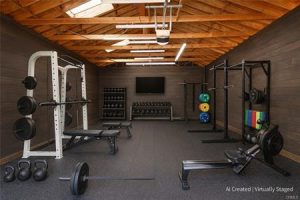
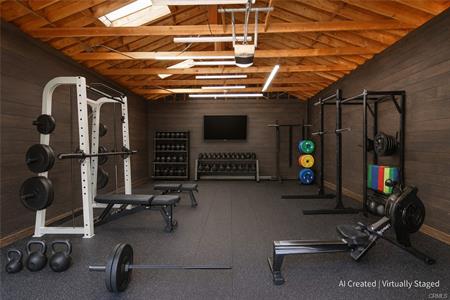
A new real estate law requires a disclaimer on all AI altered images. An AI created image of a garage remodel.

Standard edits — brightness, exposure, vibrance — are still acceptable with no disclosure needed. But if the content of the photo has been changed, the original unedited photo must also be published alongside it.


Never Permitted: You are not allowed to remove structural elements such as walls, power lines, or fences, and never add landscaping or features that don’t exist. No greening a dead lawn. Listing photos should be representative of what you are selling. Material changes can be misleading and ultimately impact a buyer’s decision to purchase a home.

Smoke Residue Disclosure

Sellers of 1–4 unit residential properties must now disclose ANY known history of smoking on the property and specifically any smoke residue from any third-hand smoke devices. These devices include all nicotine products, not limited to cigarettes, hookahs, electronic cigarettes, smokeless tobacco, and vape devices. The Homeowner’s Guide to Environmental Hazards which has traditionally included topics like lead, asbestos, mold, and radon, will now include a section on smoke residue.  

Fun Fact!

California has a new state shrub — the bigberry manzanita. You’re welcome, manzanita fans.

Wildlife Relief Programs

Safe Homes Grant Program: Homeowners in high wildfire risk zones may apply for grants to install fire-resistant roofs and establish ember-resistant “Zone-Zero” defensible space around their homes. Check your property’s fire hazard severity zone →

Mortgage relief: Homeowners facing hardship due to wildfires may request extended mortgage forbearance while they recover. HUD’s guidance on mortgage forbearance options →

NEW RENTAL PROPERTY LAWS

Refrigerators & Stoves Now a Requirement in Rentals
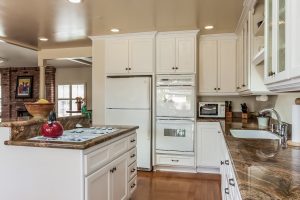
As of January 1, 2026, California rental units must include a working stove and refrigerator as part of habitability standards. This applies to leases entered into, renewed, or continuing on a month-to-month basis as of the beginning of 2026. The law requires the appliances to be in working order and suitable for safe cooking and food storage. It does not mean you must replace a broken refrigerator with the exact same brand, finish, or model. But it does mean the replacement has to do the job.
 
 
Tenant opt-out: Tenants may choose to provide their own refrigerator, but can give 30 days’ notice at any time, requiring the property owner to provide one instead. Read California Civil Code §1941.1 on habitability →

Tenants Can Opt-Out of Bundled Internet Services

For residential tenancies starting, renewed, or continuing on or after January 1, 2026, rental property owners must allow tenants to opt out of third-party internet subscriptions that have been bundled with the rent charges. If a property owner violates this law, the tenant may deduct the subscription cost from the rent. Retaliation against tenants exercising this right is prohibited.

Fun Fact!

Diwali is now an official California state holiday, celebrated November 9th. Public schools and local government offices may be closed.

Social Security Benefit Disruptions May Be An Eviction Defense

This year, California has created a protection for tenants whose Social Security benefits are interrupted due to federal government action such as a government shutdown. Under this law, these tenants have an affirmative defense in an eviction case for nonpayment of rent, if the missed rent was caused by such government action. The law also requires proof of the hardship and a repayment plan once benefits are restored. This law has been enacted to help seniors on fixed income; however, it may impose a hardship on mom-and-pop rental property owners. The good news is that the rent is ultimately paid. The tenants are just given a grace period while their social security payments are interrupted and re-started. This protection is in effect through January 20, 2029.
 

Security Deposits

If a tenant paid their security deposit electronically, the rental property owner must offer the option to return it electronically as well. A paper check can only be issued if both parties agree in writing.

When multiple tenants are on a lease, deposits can now be returned in separate payments rather than in one lump sum.

Fun Fact!

Robo-taxis can now get traffic tickets.

GOOD TO KNOW LAWS

Slow Down, Move Over Law Expanded

This original law requires drivers to move over and slow down when approaching stationary emergency vehicles, tow trucks, or road maintenance vehicles with flashing lights. And now it includes any stopped vehicle using hazard lights or emergency indicators. If moving over a lane is not possible, slowing down to a safe speed is required at the very least. Breaking this law can incur fines up to $1,000 and possible points on your record. More importantly, this law could help prevent numerous injuries and deaths on the side of the road. 

Traffic Light Cameras Return

Those controversial cameras at traffic light intersections are making a comeback. But now, the violations will be mailed to the person to whom the car is registered regardless of who is driving the car. And penalties will be civil rather than criminal. But most importantly, hopefully it will help to decrease the number of fatal crashes at intersections.

School Zone Speed Limit Decreased

California is lowering school zone speed limits statewide from 25 mph to 20 mph — with a state-mandated deadline of January 1, 2031. However, local municipalities have the option to implement the 20 mph limit any time before then, so don’t assume your school zone is still 25 mph. Check with your city.

Fun Fact!

Cat declawing is now illegal statewide. Only medically necessary procedures by a licensed vet are permitted.
 

E-Bike Rules Tightened

There has been a great deal of controversy around e-bikes. And there is a general belief that the public is not always properly educated on, or does not understand, the differences between the classes of legitimate e-bikes and off-highway motorcycles. And this misunderstanding has the greatest impact on the safety of our kids.
Under this new law, off-highway motorcycles shall include:
1. Vehicles with 2 or 3 wheels with an electric motor that can be modified to travel at speeds over 20 mph solely on motor power or attain 750 watts of power.
2. Vehicles with 2 or 3 wheels with an electric motor that have been modified to travel at speeds over 20 mph solely on motor power or attain 750 watts of power.
3. Vehicles that have their operable pedals removed.
Off-highway motorcyles can only be legally operated by licensed individuals over the age of 16.
One step down from off-highway motorcyles are Class 3 e-bikes (which are pedal assist with a speed up to 28 mph). These can only be operated by an individual who is at least 16 years old, wearing a helmet.
Police can impound Class 3 e-bikes or off-highway motorcycles if they are being operated by minors <16 years of age or unlicensed drivers. Parents can be held legally and financially responsible. In order to claim an impounded e-bike, the minor may have to attend an in-person safety training, and a parent or guardian’s presence may be required.


Also new: All e-bikes must have a rear red reflector or flashing light at all times. California DMV’s e-bike classification guide →

Smart Phone Ban in Schools

Starting July 1, 2026, all California public and charter schools must implement a ban or meaningful limitation on smartphone use during school hours. California Department of Education guidance on the policy →

Chatbot Disclosure

As of July 1, 2026, companies must disclose when customers/users are communicating with an AI-bot rather than a human. ( I think it’s typically pretty obvious, and pretty much pervasive at this point, but ok.)

Fun Fact!

We have a new state snake – the giant garter snake is getting its due. I say it’s about time!

CSU Automatic Admissions

Eligible students with a minimum 2.5 GPA in college-prep courses will be automatically accepted (upon application) to one of 16 participating California State University campuses. This law serves to assist schools with declining admissions, and encourages students to apply who may not have otherwise thought they could go to college. Learn about CSU admissions →

Used-Car Cooling Off Period

As of October 1, 2026, when you buy a used car, there is a 3-day return window. Of course, there can be no damage to the car, the car cannot have been driven more than 400 miles, and a restocking fee will be applied up to $600. Additional fees may apply if you drove more than 250 miles. So no free joy rides! California DMV consumer guide for car buyers →

Used-Car Cooling Off Period

As of October 1, 2026, when you buy a used car, there is a 3-day return window. Of course, there can be no damage to the car, the car cannot have been driven more than 400 miles, and a restocking fee will be applied up to $600. Additional fees may apply if you drove more than 250 miles. So no free joy rides! California DMV consumer guide for car buyers →

Final Note: This post is for informational and entertainment purposes only.

I’m not a lawyer, and nothing here should be taken as legal advice. For any specific legal questions, please consult a licensed attorney.

If you have real estate related questions, I’m all yours. Simply reach out!


Designed & Powered by ILGM, Inc., Experience the difference!